Note: This is a fictional first-person story used for a creative review. It’s based on public info and common policy terms, not my real-life experience.
Why I even looked at it
I shoot at a small range on Saturdays. I travel for hunts in the fall. Sometimes those trips take me across the pond; if an itinerary ever routes me through France’s Alsace region, this Strasbourg local connection hub offers quick meet-ups and insider city intel so my evenings are as well-planned as my hunts.
I have the same mindset when I'm stateside; if a layover or match drops me near Union County, I bookmark this highly rated TS escort in Roselle for a straightforward, no-surprise way to line up post-range relaxation—checking the listing gives me pricing, availability, and reviews at a glance so I'm not wasting time swiping.
I worry about two things. One, my guns getting stolen. Two, someone getting hurt by accident at the range. Simple fears, but they stick. So I wanted coverage that felt clear and fair.
So, what does it even cover?
Here’s the thing. The NRA used to push a self-defense plan called Carry Guard. That’s gone. Back in 2017, the National Rifle Association (NRA) launched its Carry Guard program in 2017, aiming to provide self-defense insurance and training for gun owners. The plan quickly ran into trouble; regulators in New York determined it violated state law, fined its administrator $7 million, and by 2019 the NRA had pulled the Carry Guard insurance products entirely. If you’re skeptical about the NRA’s shifting role in the gun world, you can read a different perspective at StopTheNRA.com. For a deeper dive into how the coverage actually stacks up, this candid analysis of NRA gun insurance coverage walks through the same pros and cons I’ve wrestled with. What’s around now (NRA-endorsed) tends to be two lanes:
- Firearms insurance for your stuff: guns, optics, cases, maybe ammo and mags.
- Personal firearms liability: if your gun goes off by accident and someone gets hurt or you damage property, at the range or while hunting.
It’s not a criminal defense plan for self-defense shootings. If you want that, look at groups like USCCA, CCW Safe, or U.S. LawShield. Different lane.
Real moments that made it click for me
These are everyday scenes. You’ll see why the coverage matters.
-
Hotel lot theft: Picture this. You’re driving to a match. You lock your truck. You run in for a quick bite. You come back, and your case is gone. A Glock with a Holosun, two mags, and a light—poof. With firearms property coverage, you file a police report, list serials, send photos and receipts. You get paid for replacement value (up to your limit). Homeowners might cover it with a special rider, but off-premises is where a lot of folks get stuck. This helps.
-
Wet safe, sad day: A burst pipe in winter. Water seeps into the safe. You open it and your blued rifle looks like it sat in a swamp. Firearms insurance can cover water damage and rust from a covered event. You show they were stored right. You send in pics and a gunsmith note. Parts and refinish can be covered. It’s boring paperwork, but less pain than a total loss.
-
Range oops (liability): You’re on a public range. You pack up. Your muzzle bumps, a negligent discharge happens, and a round hits a lane divider. No one’s hurt, thank God, but damage is damage. Personal firearms liability can help with property damage or injury from accidents. It won’t cover criminal acts. It won’t cover an intentional act. But it handles “I messed up” moments we all fear.
Costs and limits (plain talk)
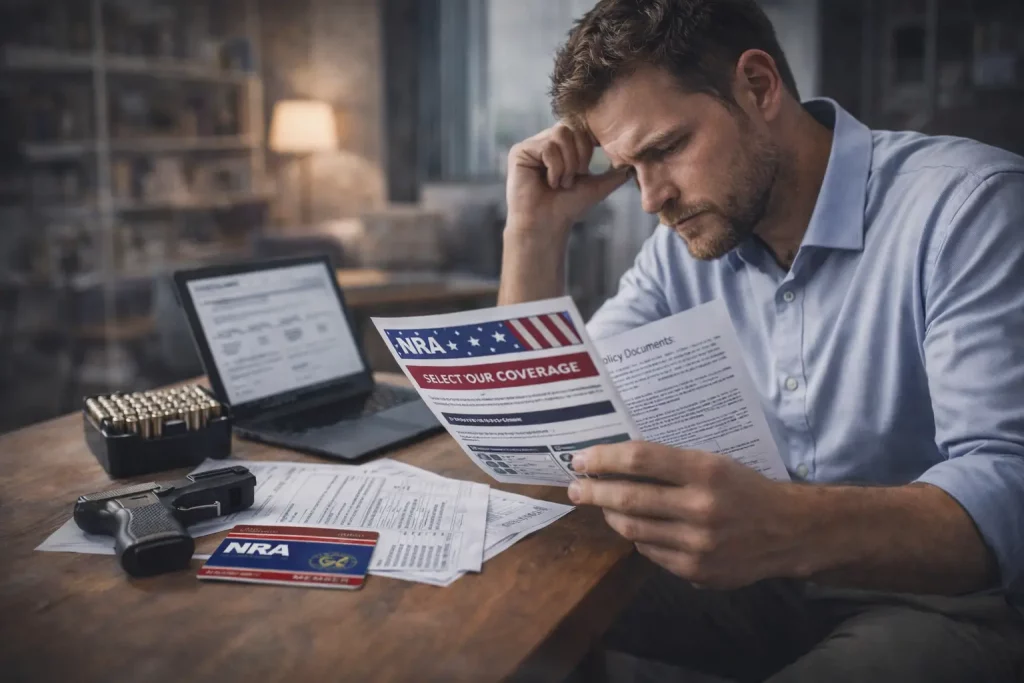
Rates change by state, value, and carrier. Most gear plans ask you to pick a total value (say, $10,000). You pay yearly. Sometimes there’s no appraisal up to a set amount per gun. You still need proof—serials, photos, receipts. Liability often comes with a chosen limit (like $100k, $300k, $500k, or more). Higher limit, higher price. Pretty normal.
A small note: some states block certain gun-related insurance products. If a page won’t load for your zip, well, that’s the reason.
What I liked
- It covers your stuff when it leaves home. Range, truck, hotel—big plus.
- Accessories count. Optics, lights, cases, even slings add up fast.
- It’s fairly simple to set a value and list items. No museum dance.
- Liability for accidents gives peace of mind at the range and in the field.
What bugged me
- It’s not self-defense legal coverage. Folks mix these up. They’re not the same.
- You still need to prove value. No receipts? Expect delays.
- Mags and ammo can confuse adjusters. Spell out what you own, neat and clear.
- Some per-item caps apply. One high-end rifle can hit that ceiling fast.
How it stacks up (quick compare)
- Homeowners with a rider: Good for theft or fire at home. Off-premises can be thin unless you add special coverage. Deductibles can be high.
- Collectible policies: Great for big collections. Often low hassle and broad travel coverage.
- Self-defense plans (USCCA, CCW Safe, U.S. LawShield): Legal defense for use-of-force cases. Not property coverage. You might want both, not one.
Honestly, it’s like fishing gear. A single rod isn’t enough for every lake. You match the tool to the trip.
Tiny tips that helped me stay sane
- Keep a simple gun log: make, model, serial, photos, and receipts.
- Snap pics of optics and mounts on the gun. Saves back-and-forth.
- Store a copy in the cloud and a paper printout in your safe.
- Use a dehumidifier in the safe. Rust is sneaky.
- On the road: lock cases, park under lights, and keep the list separate from the gear. Sounds obvious; still worth saying.
Who it fits
- The weekend range crowd with a few pistols and a rifle.
- Hunters who travel with a shotgun and a scoped bolt gun.
- Folks who want accident liability for range days and campsites.
Who might skip it
- Anyone looking for self-defense legal coverage. This isn’t that.
- Pure collectors with a vault of rare pieces. A dedicated collector policy may suit better.
The short verdict
For covering guns and gear, NRA-endorsed coverage can do the job. It’s straightforward, it travels with you, and it pairs well with a homeowners rider. For accidents, the liability piece helps you sleep a little better.
But if you want legal help after a defensive use, you’ll still need a separate plan. Two lanes, one toolbox. Not perfect, but clear—and that’s what I like.
If you’re on the fence, write down your actual kit and what it would cost to replace. The number will surprise you. And once you see that number, the choice gets easier, real fast.