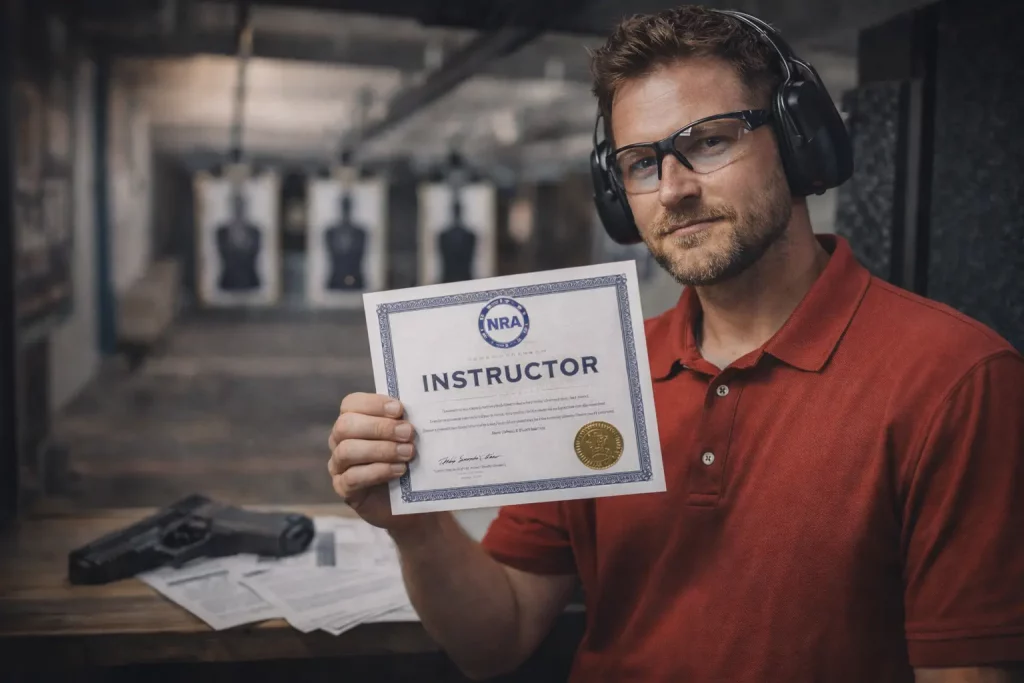
I’ll be honest. I was nervous. Teaching is one thing. Teaching people with guns? That felt big. But I wanted to help new shooters, and to do it right. So I signed up for the NRA Instructor Certification for Basic Pistol. Before I committed, I combed through the official NRA Instructor Certification Requirements to make sure I ticked every prerequisite box. I finished it last summer in Texas. It was hot, loud, and pretty great. If you’d like to compare my experience with another first-hand account, check out this detailed recap of earning an NRA Instructor Certification.
Let me explain.
The Path I Took (Simple and Real)
- I did BIT first. That’s Basic Instructor Training. It’s about how to teach, not how to shoot. We talked lesson plans, safety, and how to coach. We even did a practice lesson with markers and a flip chart.
- Then I did the Pistol Instructor part. It ran the next day. Same trainer. Long day. Lots of slides. But also real drills and coaching time.
- There was a pre-course check. I had to show safe gun handling, pass a written test, and shoot a group at a set distance. Not hard, but not a cakewalk.
- I paid my fees and joined the NRA Instructor Portal. The portal felt clunky. I had to call once because a button didn’t show. It got sorted, but I lost an hour and a half.
If you’re mapping out your own journey, the broader lineup of NRA Instructor Training Courses makes it clear how BIT anchors every other discipline.
Total cost for me: about $475 with range fees, ammo, and snacks. Then later, I paid for student packets and my instructor insurance.
A Few Moments That Stuck With Me
- A left-handed student struggled with grip during a mock lesson. I showed her a slight thumb change, and her shots tightened right away. Her face lit up. That look is why I teach.
- Our trainer, a retired Marine, told a quick story about rushing a rushed shot. It landed. You could feel the room slow down a notch. Safety first, every time.
- The slides were, well, dense. Some pages felt like 2008. But the content held up. The safety rules and flow made sense, and the drills fit real class time.
- Range day was 96 degrees. My electronic ear pro ate a battery before lunch. I keep spares now. And sunscreen. And a cooler with ice towels.
What I Had To Do
- Teach a short bit to the class. I picked how to check an empty chamber. I used a “blue gun” and dummy rounds. I kept it slow and clear.
- Shoot a clean group on paper. Targets don’t lie. I did fine, but I had one flyer. I talked through why. The trainer liked that I owned it.
- Grade a sample test. Sounds boring. It wasn’t. It showed me how easy it is to miss vague questions if you don’t read them out loud.
After I Passed: Teaching Real People
My first class had six folks. Two were brand-new. One was a dad with his teen. One was a lady who said, “I’m scared of recoil.” We did dry fire with a SIRT pistol, then live fire in short sets. I used the NRA handouts and my own targets. I kept the pace slow and steady. No rush. No macho vibe.
That mom who feared recoil? By the end, she smiled and said, “I can do this.” She kept her target, and I kept the little tear in my eye to myself.
The Good Stuff
- Strong safety focus. It’s baked in. You don’t skip it. You repeat it.
- Clear structure. The lesson plan flows. New teachers can follow it.
- Credibility. People know the NRA name, so it helps with sign-ups.
- Coaching time. You don’t just sit. You teach and get feedback.
The Not-So-Great
- The slides feel dated. They work, but they’re stiff. I add stories and drills so it’s not just reading.
- The portal is clunky. It loads slow, and the interface feels old.
- Costs add up. Course, ammo, packets, insurance, range fees. Budget more than you think. If you’re wondering whether the NRA’s own instructor insurance is actually worth the money, you might appreciate this straight-talk look at NRA gun insurance coverage.
- Scheduling. Classes book fast, or they’re far away. I had to drive an hour and a half each day.
If you’d like to explore a completely different viewpoint on the NRA’s role in gun safety, visit Stop the NRA.
While poking around the somewhat clunky NRA Instructor Portal, I realized how much instructors lean on online discussion boards to trade tips, troubleshoot gear, and swap lesson ideas. It reminded me that niche digital communities thrive far beyond the firearms world—take this rundown of active sexting forums as an example of how specialized spaces can offer guidance, safety advice, and a supportive peer network for anyone looking to learn the ropes in a judgment-free environment.
Along the same lines, if your training weekend lands you in southeastern Louisiana—some pistol courses pop up just across Lake Pontchartrain—you might want an easy, judgment-free way to relax once the brass is swept and the guns are cased. Checking out the curated listing of TS escort services in Slidell gives you vetted profiles, clear rates, and real customer reviews, so you can spend your off-range hours stress-free instead of scrolling dubious ads.
A Tiny Detour: Gear I’m Glad I Brought
- Extra batteries for ear pro
- Painter’s tape and a Sharpie for targets
- A small first aid kit (never needed it in class, but I like having it)
- Snacks and a big water bottle; summer heat is no joke
You know what? A cheap folding chair helped too. Range benches are hit or miss.
Who This Fits (And Who It Doesn’t)
- Fits: Patient folks who like coaching and can stay calm. If you enjoy step-by-step teaching, it’s a match.
- Doesn’t fit: If you want to freestyle or skip structure, you’ll get annoyed. If you hate paperwork, brace yourself.
What I Wish I Knew Before
- Do BIT and your discipline course on the same weekend. Your brain stays in “teacher mode.”
- Practice the pre-course drills a week before. Not the night before.
- Order student packets early. Shipping times vary.
- Keep your teaching demo simple. Clear beats clever.
My Results, Three Months Later
I ran two beginner classes and one private lesson. I used the NRA plan as my base, then added my spin: more dry fire, more coaching on trigger press, less time reading slides. My feedback cards said “safe,” “calm,” and “clear.” That felt good.
Final Take
The NRA Instructor Certification gave me what I needed to start strong: safety, structure, and a name people trust. It’s not perfect. The tech feels old, and the costs nudge up. But the core is solid, and the teaching moments are worth it.
Would I do it again? Yep. I’d bring more water, fresher markers, and the same steady voice.
Score: 4 out of 5. Strong choice if you want to teach the right way and keep folks safe.